Eames Themes
25.01.26
Charles and Ray Eames
The most famous “chairs people” who were never just about chairs
Before this project, I think I had the same surface-level Eames knowledge most people have. Lounge chair, plywood chair, mid-century vibes, Herman Miller, job done. Then you start digging and it becomes obvious that the chairs are almost the easy part. Their real legacy is that they treated design like a whole way of thinking. Furniture, exhibitions, films, photography, graphics, education, even how to explain complex ideas to normal people, it all sat under the same umbrella.
What I find interesting is how “Eames” is now used almost like a style label, but the more you look at them, the less it feels like a style and the more it feels like a method.
Who they actually were, and how the partnership really worked
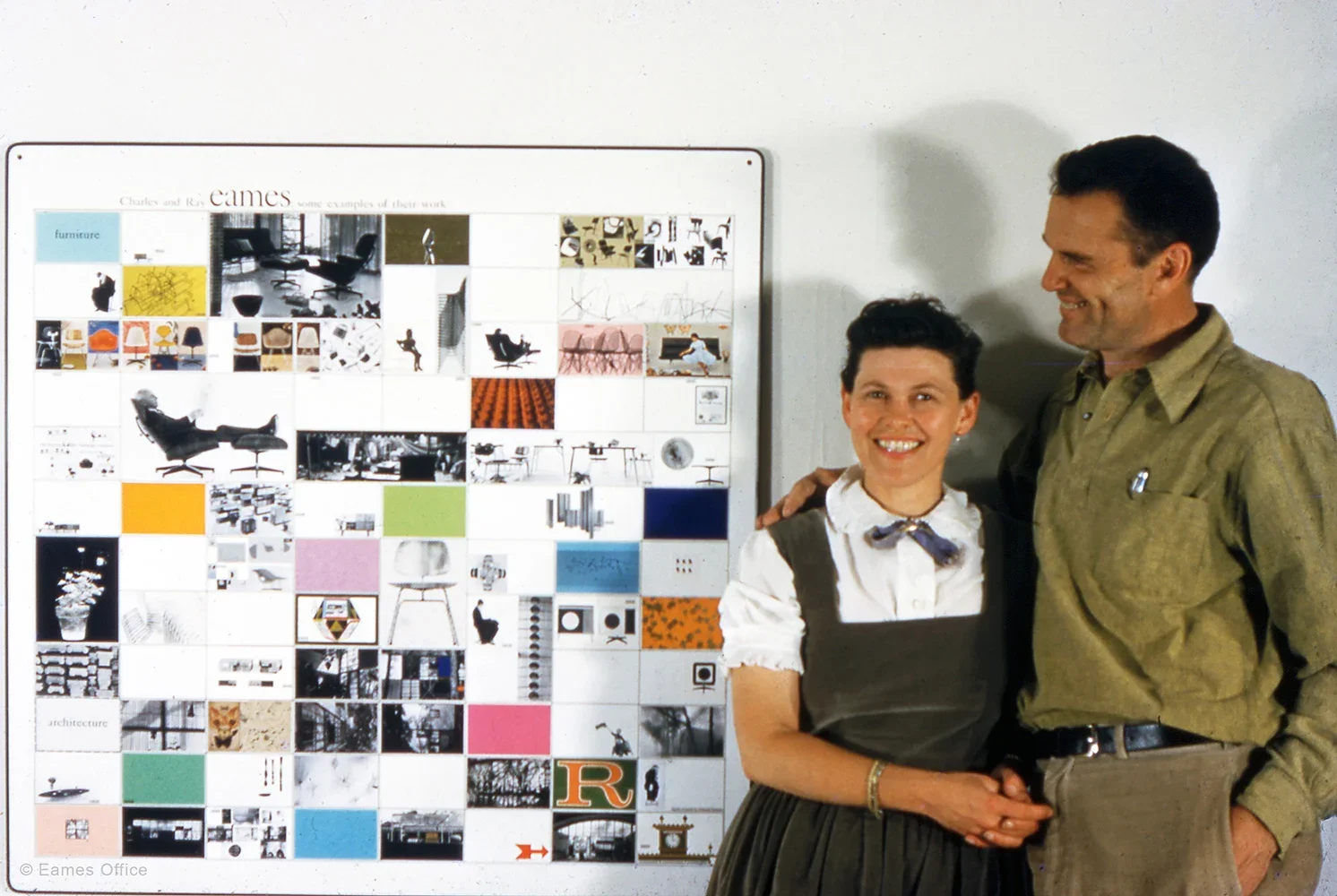
Charles Eames was born in 1907, Ray Kaiser Eames in 1912. They met at Cranbrook Academy of Art, and they married in June 1941, then moved to Los Angeles almost immediately.
One detail I love is that in their early LA period, they were literally moulding plywood in the spare bedroom of their apartment, which was in Richard Neutra’s Strathmore Apartments. That image of two people testing materials in a small room feels like the real origin story.
Something else that feels niche but says a lot about their design circle is that Vitra mention their wedding ring was designed and made by Harry Bertoia. It is such a “design history cinematic universe” detail.
The “good and bad” side of the partnership is complicated. They were genuinely a joint creative engine, but Ray has often been reduced to a supporting role in the way people talk about them. There’s a long-running discussion around how Ray’s contribution gets framed as styling or presentation, even when those things were central to how the Eameses communicated their ideas. Design Observer talks about how people would have called Ray a “stylist” today, and how that sort of work has often been undervalued, even while being essential.
The furniture, but more importantly the material obsession behind it
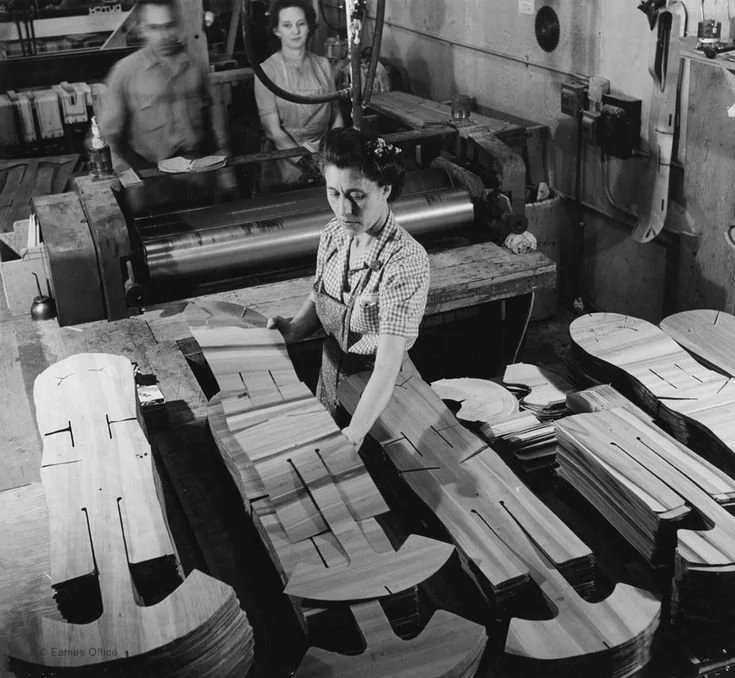
If you want the cleanest summary of what made their furniture different, it is that they were obsessed with how things are made, not just what they look like. Their moulded plywood work is a perfect example. They were pushing a technique, then letting the form come out of what the material could honestly do.
During WWII they designed a moulded plywood leg splint for the US Navy. It is one of those projects that sounds random until you realise it helped them refine the exact manufacturing techniques that later fed into their plywood furniture. The Met describes how access to wartime manufacturing helped them perfect plywood moulding, and links the splint’s form to their later furniture language.
This is also where their famous “details” quote makes sense. It is not just a nice line, it reflects how they worked: “The details are not the details. They make the product…”
The Lounge Chair gets all the attention now, but I think the deeper Eames story is this constant loop between material, process, comfort, and mass production.
More importantly, they were designing how people understand things
The bit I think gets missed most is that the Eameses were not just making objects, they were making ways of explaining objects, and ideas, and technology. Their films and exhibitions feel like early “design for understanding.” Powers of Ten is the obvious example, it takes something massive and abstract and turns it into a story you can actually follow. It is basically design thinking as a visual narrative, not in a corporate buzzword way, in a genuinely educational way.
And then you’ve got their exhibition work, especially the stuff they did for major clients like IBM, where they were shaping how people felt about the future, computers, information, progress. This is where they get really interesting for me, because it can be read in two ways. On one hand it is brilliant communication, they made complex technology feel approachable. On the other hand it is also corporate storytelling, and sometimes you can feel that post-war optimism getting packaged up and sold back to people.
Either way, it proves they were not “just furniture designers.” They were building a whole language for modern life.

Their principles, and the people around them
They did not leave behind a neat “10 principles” list like Rams, but their mindset comes through in a few phrases that keep popping up. The big one is “the best for the most for the least”, which sums up their obsession with getting good design to more people, not as a luxury niche.
I also love the idea of the designer as a “good host,” because it makes design feel like care rather than ego. It is about anticipating needs, removing friction, and making things feel natural to live with.
And even though people talk about them like a two-person legend, they were tied into a wider network and industry. Herman Miller is a massive part of why “Eames” became so real and so scalable, because production matters as much as the idea.
Their lasting impact, and where you can still see it today
What’s mad about the Eameses is that their work doesn’t just live in museums, it’s still sitting in people’s homes, studios, and offices, and it still feels current. A lot of designers get remembered for a “look.” The Eameses get remembered for a way of solving problems, and a way of making modern life feel more livable.
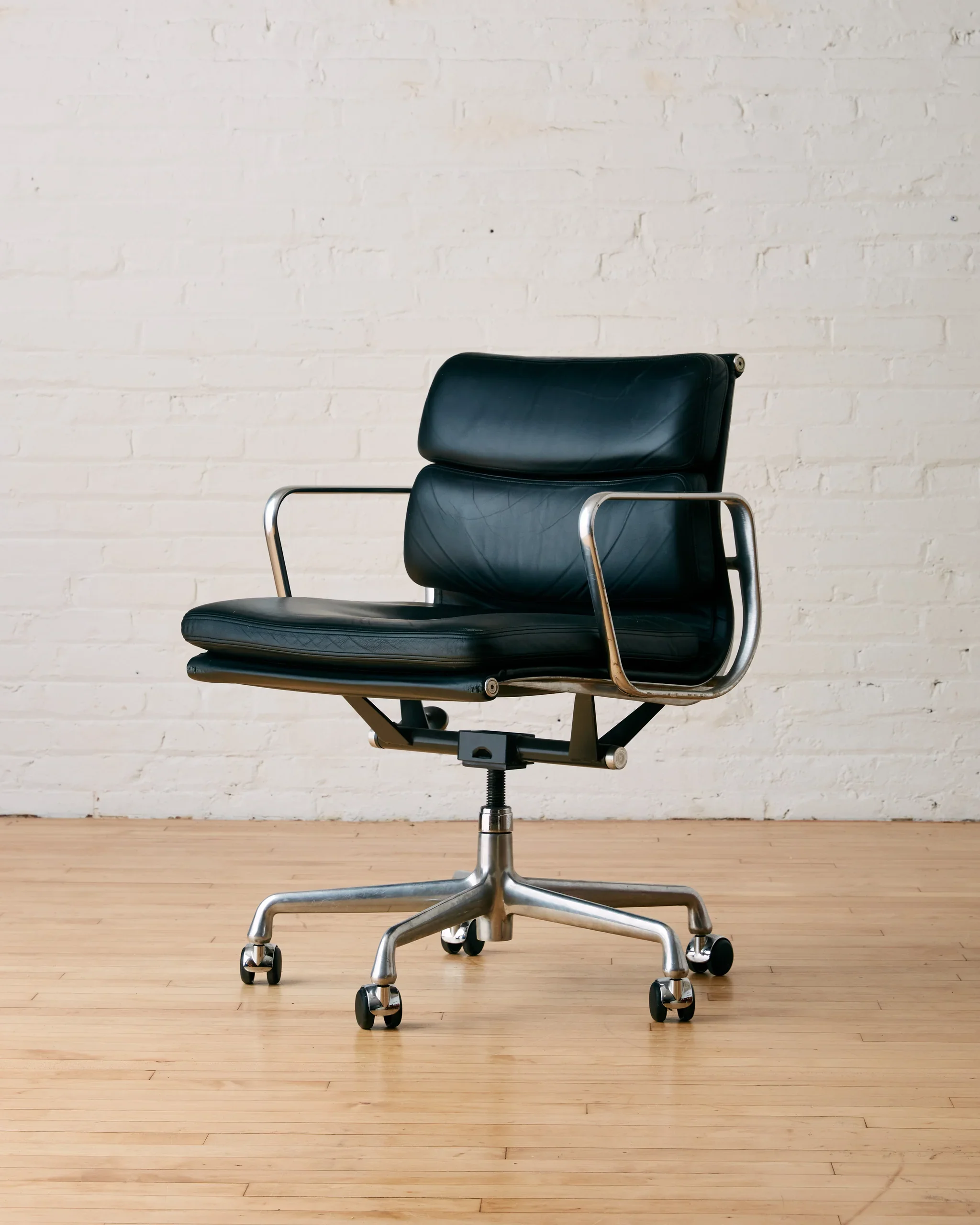
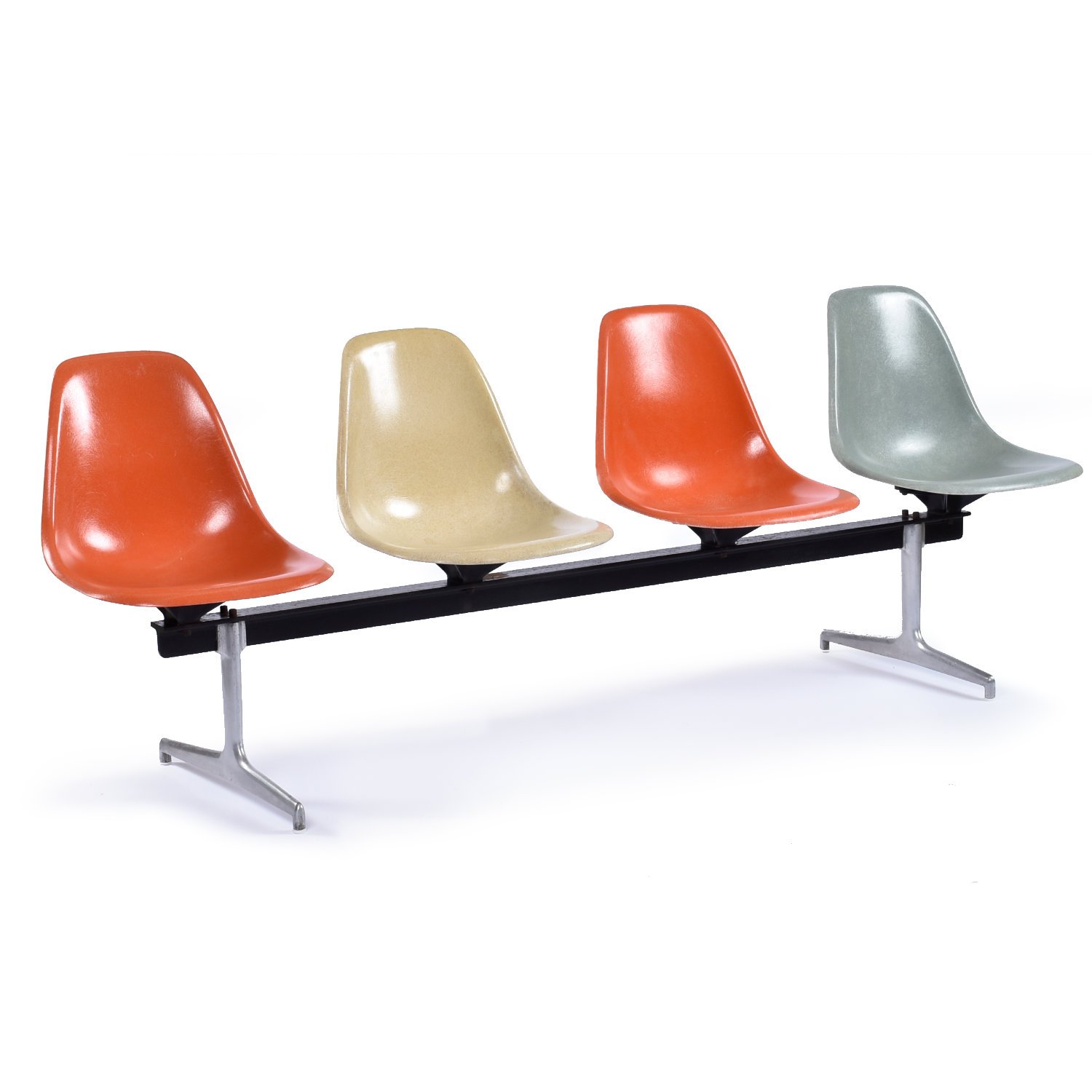
The most obvious place you see it is furniture that is still being made properly, and still being used as intended. The Eames Aluminium Group chairs are everywhere in meeting rooms, studios, and even homes. One of my parents actually brought one of these home from work as an office chair when I was younger and it still lives in our home to this day. Vitra still produces them using essentially the same manufacturing approach developed with the Eames Office, with a few updates for modern specs. That’s a pretty rare kind of legacy, a design that is not just iconic, but still functioning as a default choice for how an office chair should feel and behave.
You also see their impact in smaller everyday objects that still look playful without feeling childish. The Hang-It-All is a good example. It was designed to encourage kids to actually hang their stuff up, and it’s still sold today because it solves a normal problem in a friendly, human way. It’s another Eames product I’ve been fortunate enough to grow up with in my family home, mounted by our front door, as originally intended.
And then there’s their influence outside furniture. Powers of Ten is still one of the best examples of design as explanation. It takes a complicated concept and makes it feel obvious through structure, pacing, and visuals, and it’s been used widely in education for decades. That whole approach shows up today in UX thinking, explainer videos, museum exhibits, and basically any situation where someone needs to make complexity feel understandable.
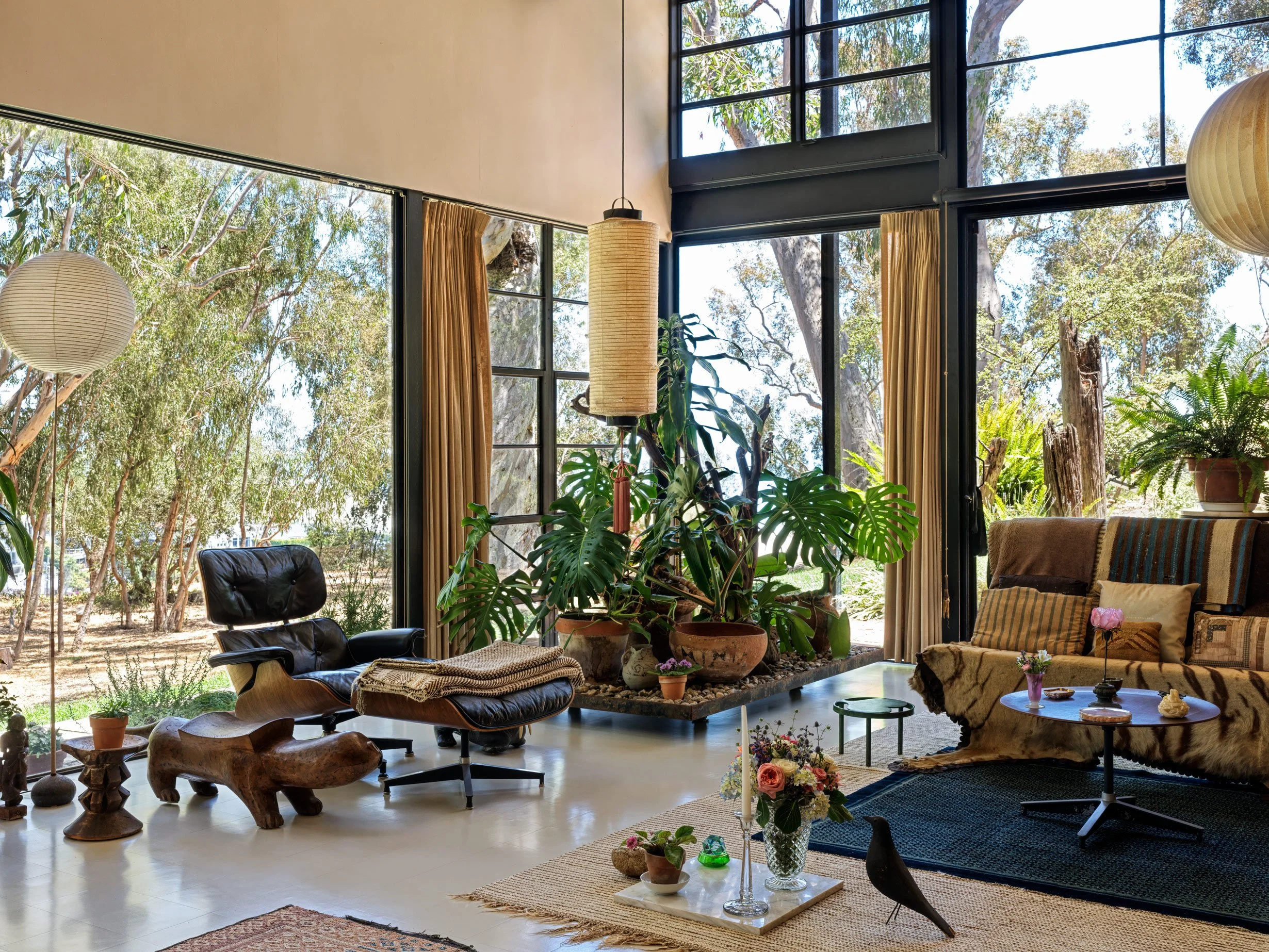
Finally, I think the Eames House is still a reference point for modern architecture, not because people want to copy the exact look, but because it proved you could build something modular and industrial, while still making it warm and lived-in. Even recent writing and research still uses it as a way to talk about prefabrication and modern living as an ongoing experiment, not a fixed style.