The Wonderful Everyday
28.01.26

The Wonderful Everyday
I think IKEA is one of those companies that has had such a big influence on everyday life that it is quite easy to overlook it. It is not just a furniture shop. For a lot of people, IKEA has shaped what a first flat looks like, what a student room looks like, what a rented home looks like, and even what people think “good design” should cost. It has made a certain version of home design feel normal, affordable and accessible.
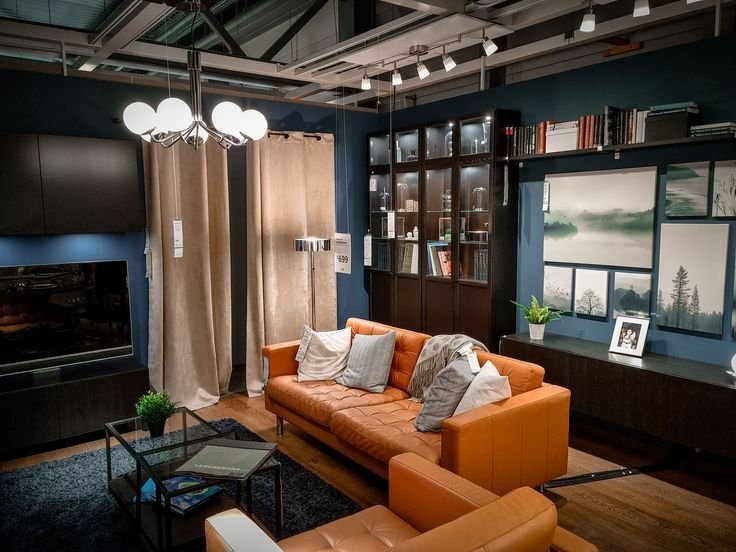
What interests me most is that IKEA does not only sell furniture, it sells the idea of a home. The showroom layout is a massive part of this. You do not just walk through rows of chairs and tables, you walk through fully arranged rooms. A living room is set up with a sofa, rug, lamp, shelves, plants, mugs, cushions and storage boxes. Everything is shown as part of a lifestyle rather than as a single object. This makes buying furniture feel less like a technical decision and more like imagining a future version of your own life.
That is probably one of IKEA’s biggest design influences. It has taught people how to put a room together. Even if someone does not buy every item in the display, the showroom gives them a kind of visual instruction manual. It shows what colours go together, how storage can be hidden, how small rooms can be made to feel organised, and how a home can look designed without feeling overly expensive. In that way, IKEA has not just designed objects, it has designed taste at a mass scale.
This idea of accessible design also connects interestingly to Terence Conran. Conran opened Habitat in London in 1964 with the aim of bringing a more modern, European way of shopping for homeware to Britain. Habitat introduced things like duvets, paper pendant shades, modern furniture and more stylish everyday objects into the British home. In many ways, Conran helped create the idea that good design did not have to be reserved for wealthy people or specialist design shops. It could be part of normal domestic life.
There is also a clear connection in the way Habitat and IKEA made design feel approachable. Habitat used catalogues, room sets, accessible prices and contemporary styling to change how people imagined their homes. By 1971, Habitat was already selling furniture from “take-away” racks, linking it to the flat-pack revolution in British home retail. IKEA then took a similar idea much further, scaling it globally and making it part of a complete system: showroom, warehouse, flat-pack, self-assembly, café, catalogue and low-price design.
I do not think this means Conran simply “created IKEA”, because IKEA had its own Swedish roots and had adopted flat-pack much earlier. IKEA was founded by Ingvar Kamprad in 1943, and its own history links its approach to thrift, practicality and life in Småland, Sweden. But I do think Conran helped prepare the ground, especially in Britain, for the idea that modern home design could be democratic, casual and affordable. Habitat made people want a more designed home, and IKEA made that idea available at a much bigger scale.
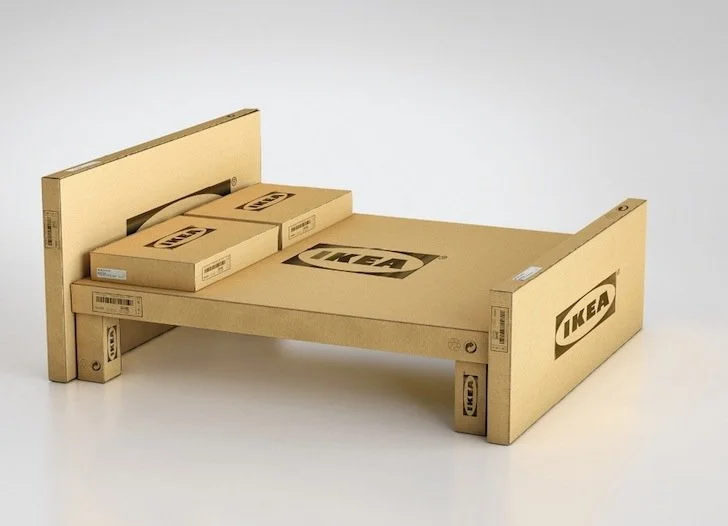
The flat-pack system is another huge part of this. IKEA adopted flat-pack furniture in 1953 as a way to reduce transport costs and damage, and it became central to the company’s model. From a design point of view, this changes the whole relationship between the customer and the product. You do not just buy the finished object, you take it home, build it, struggle with the instructions, and then feel a small sense of ownership over it. Sometimes that is frustrating, but it also makes furniture feel more personal and achievable.
It also means the product has to be designed not only as a finished object, but as something that can be understood and assembled by almost anyone. The packaging, the instructions, the fittings and the order of assembly all become part of the design. In that way, IKEA made furniture feel less intimidating and more accessible, especially for people furnishing a first flat, student room or rented home.

There are more complicated downsides to this as well. IKEA has made design more affordable, but it has also helped normalise a kind of “fast furniture” culture, where furniture is bought cheaply, moved around for a few years, then replaced rather than repaired. A lot of this comes from the material choices needed to keep prices low. Particle board, veneers and laminate surfaces can be efficient and affordable, but they often do not age, repair or refinish in the same way as solid wood. This means some products can start to feel temporary, even if they are designed to look clean and permanent.
There is also an environmental tension in IKEA’s scale. The company uses huge amounts of timber, so even when it promotes responsible sourcing and circular design, its impact is still massive simply because of how much it produces. IKEA has been criticised by environmental groups over wood sourcing linked to forests in Eastern Europe, including Romania’s Carpathian forests, although IKEA has disputed allegations and says it relies on certification, audits and responsible forestry standards.
I think this makes IKEA interesting because it is not simply good or bad. It has genuinely made better-designed homes more accessible to more people, which is a huge achievement. But the same system that makes it affordable also benefits IKEA financially when products become easier to replace than repair. From a design point of view, that raises a difficult question: is democratic design still fully successful if it depends on cheap materials, huge production volumes and a cycle of constant consumption?