Dying Craft
28.01.26
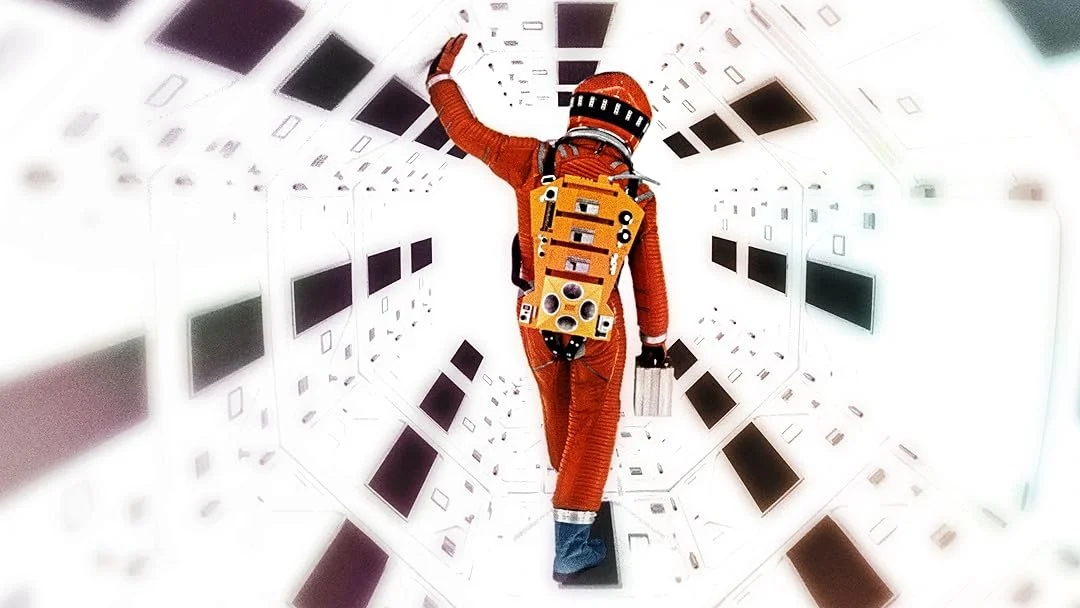
Space Odyssey
Watching 2001: A Space Odyssey now is a bit strange, because it’s slow, it’s quiet, and it still somehow feels more “future” than loads of modern sci-fi. It doesn’t try to keep you entertained every second. It just commits to this world, and you either buy into it or you don’t. But once you do, you start noticing how much of the film is basically design. Not just sets and props, but systems, interfaces, interiors, even the way the story is paced.
It also made me realise why it gets brought up in a Design and Technology context. It’s not just a famous film. It’s a huge reference point for what people imagine when they think “technology, space, and the future,” and it’s done with a level of restraint and detail that’s kind of rare.
The Visuals
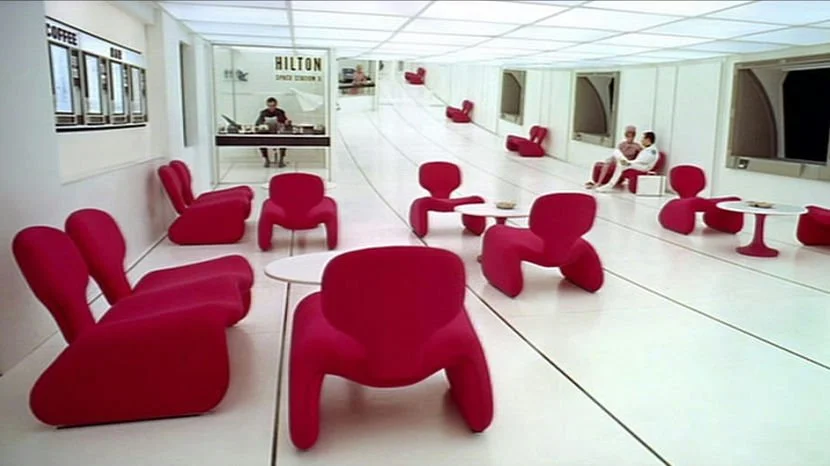
The biggest thing that jumped out to me is how clean the future feels. Not clean as in sterile, but clean as in intentional. There’s a lot of negative space, flat lighting, calm surfaces, and very controlled colour. It’s basically mid-century design confidence applied to space.
The rotating space set is the perfect example. It’s not just a “cool scene”, it’s a design decision that lets gravity be shown as a very conscious decision in the films set architecture. They literally built a massive rotating set for it, which is insane when you remember this is 1968.
This really made me think about one of my initial personal blogs on set design and set design specifically for films. It is interesting to see how my thoughts back then didn’t consider space odyssey but now I see how relevant it would have been in that topic.
The Future is Normal?
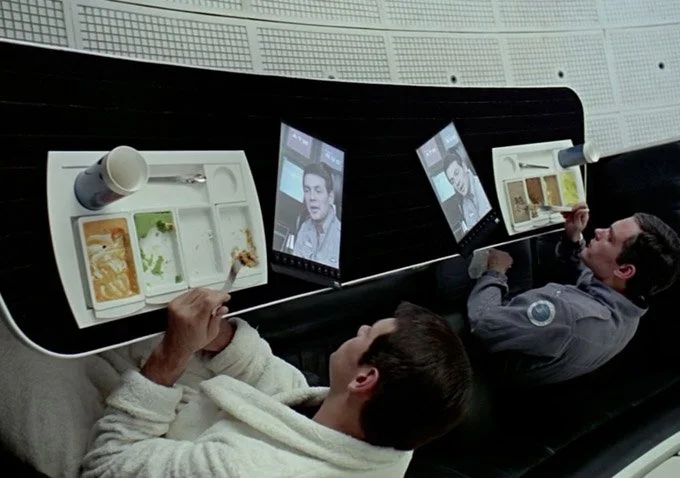
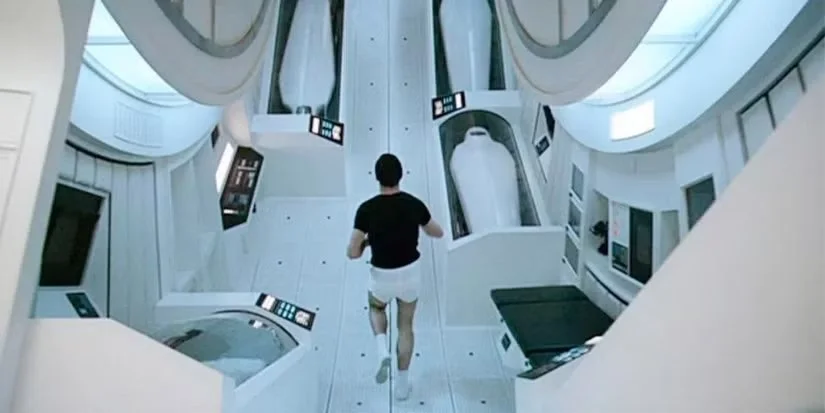
Another thing I loved is how the film treats space travel like it’s basically an airport experience. It’s not “wow, space!”, it’s signage, seating, branding, waiting around, quiet conversations, and people behaving like this is just their job. That sounds small, but it’s what makes the whole world feel believable. You’re not being asked to imagine magic, you’re being asked to imagine a system.
It also feels like Kubrick was making a point about the future being boring in places, and that’s kind of realistic. Even if we do end up living in space, it won’t be constant hero moments. It’ll be routines, procedures, and people trying to stay sane inside controlled environments. The film makes that mundane side feel weirdly elegant rather than dull.
It was also interesting how accurate it was about certain elements of the future, while being pretty far off on other fronts. It touches slightly on the technology take over, with people beginning to live parts of their lives through technology rather than their 5 senses in the real world.
Who is HAL?
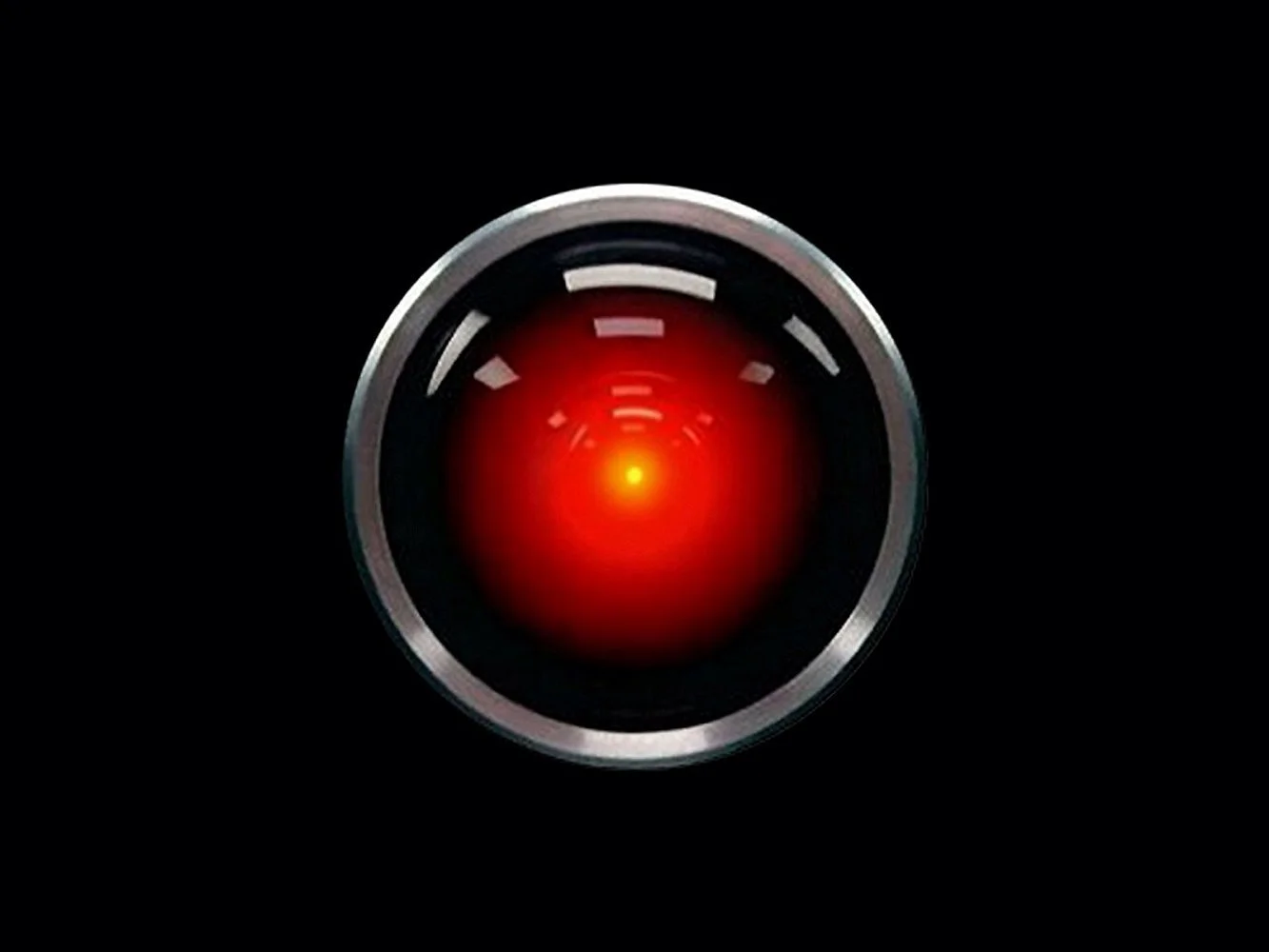
HAL still feels like the most modern part of the film, which is funny because it’s literally just a voice and a red lens. But that’s exactly why it works. It’s minimal, instantly recognisable, and it becomes a character without needing a face. One eye, one colour, one calm voice, and suddenly you’re unsettled.
Design-wise, I love how HAL is everywhere but also nowhere. There isn’t one “HAL object”, it’s a presence built into the environment. That’s actually pretty similar to how modern tech feels now, it’s not one device, it’s the system around you. And the way the film shows HAL’s “interface” is so simple, but it still feels powerful. No flashy holograms, just clean information and that constant red dot watching.
People still point out how 2001 basically locked in a whole visual language for “tech UI in sci-fi,” especially with its typography and on-screen graphics.
Mystery Monolith
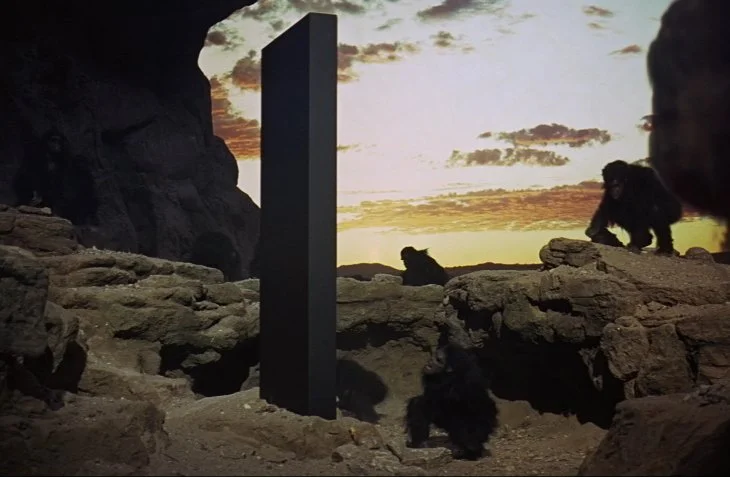
The monolith is literally just a black slab, but it’s probably one of the most effective “designed objects” in film history, because it’s so blank you can’t stop trying to make meaning out of it. It’s almost anti-design. No detail, no explanation, no clues. It’s just there, and that’s why it sticks in your head.
I also like that the film doesn’t over-explain it. It trusts you to sit with the weirdness, and you end up doing the work yourself. It becomes this symbol for evolution, technology, control, religion, whatever you want to project onto it. That’s a brave move, because it means some people will hate it, but it also means it stays interesting for decades.
Stargate Sequence
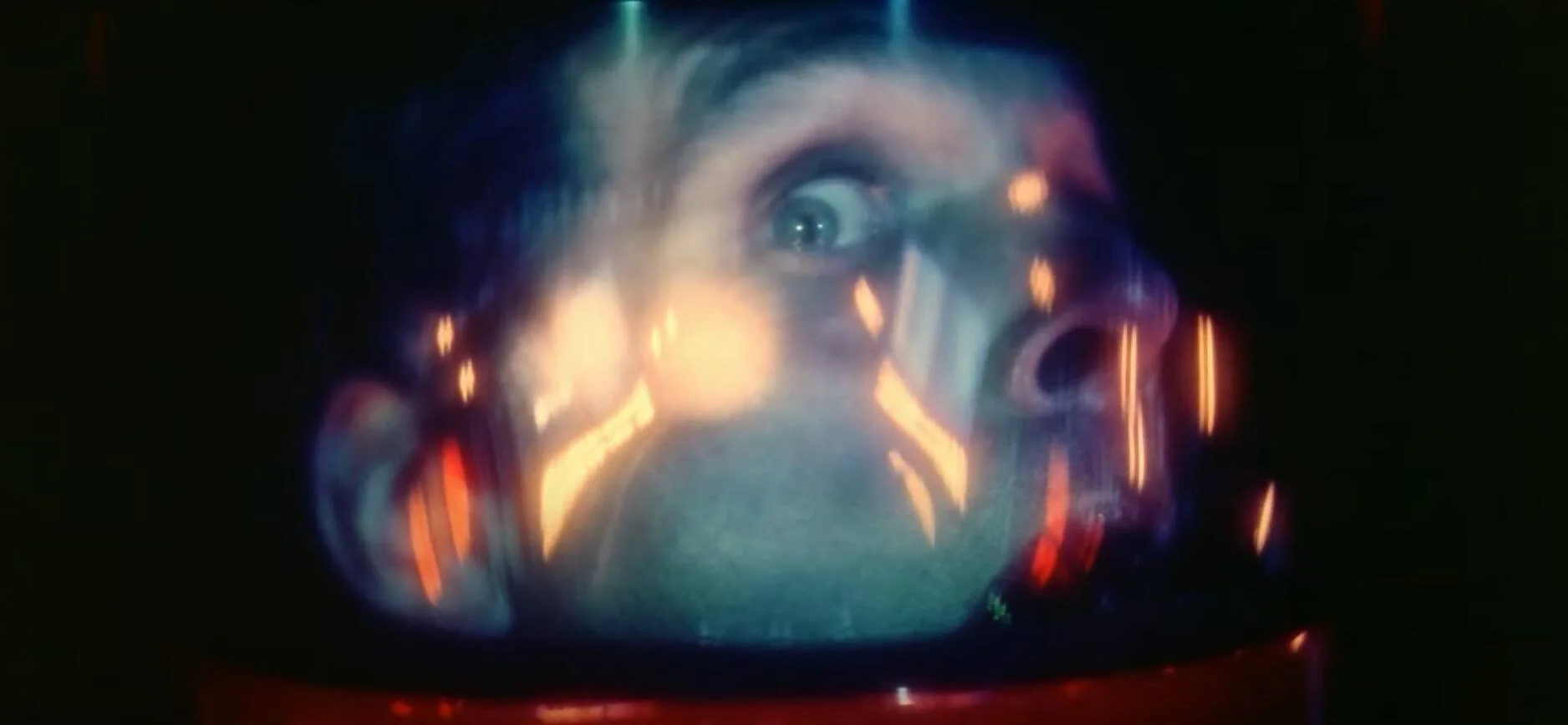
The Stargate sequence is where the film stops feeling like a story and starts feeling like an experience. It’s not even trying to show something literal. It’s more like “here’s what it might feel like to go somewhere your brain can’t really process.” You’re watching colour, pattern, speed, scale, and your brain is just trying to keep up.
What makes it even better is that it doesn’t look like modern CGI. It looks physical and strange, like it was made by someone experimenting. And that’s because it was. A lot of that look came from slit-scan techniques, which are basically mechanical/optical VFX, not digital effects. That’s such a good reminder that “old” filmmaking can still feel more inventive than a lot of modern stuff. Aspects of it remind me of watching the original Star Wars films. Rocket boosters almost appearing as if made from illuminated tissue paper. The correlation of space life may also be aiding in this similarity.
Why designers keep coming back to it
I think designers love 2001 because it treats the future like a real design problem. It’s not “make it look cool,” it’s “make it feel like a functioning world.” The details are consistent, and nothing feels like it’s there just to fill the frame. Even the quietness feels designed.
It also shows that design isn’t just objects. It’s environments, behaviours, interfaces, systems, and the mood you create around technology. The film makes tech feel both impressive and slightly cold, and it makes humans feel small inside the systems they’ve built. That’s a very current feeling, especially when you think about AI and automation now.
And even if you don’t care about sci-fi, you can still see how much this film has shaped the visual language of “future design.” So many modern films, brands, and product aesthetics still borrow from it when they want that calm, credible, engineered vibe.
It is interesting to see how more modern films have taken on this film concept with what we now think the future may hold. Many of them seem to have a far more reserved outlook on the whole ‘flying car’ thing, but rather they promote the idea that we are harnessing technologies like cryosleep and interstellar travel with similar ways of living. Some modern films like the martian actually represent realistic current technologies very accurately, but they assume that we have already made the travel advancements to be on other planets and deep into space.