Hoover Effect
20.01.26
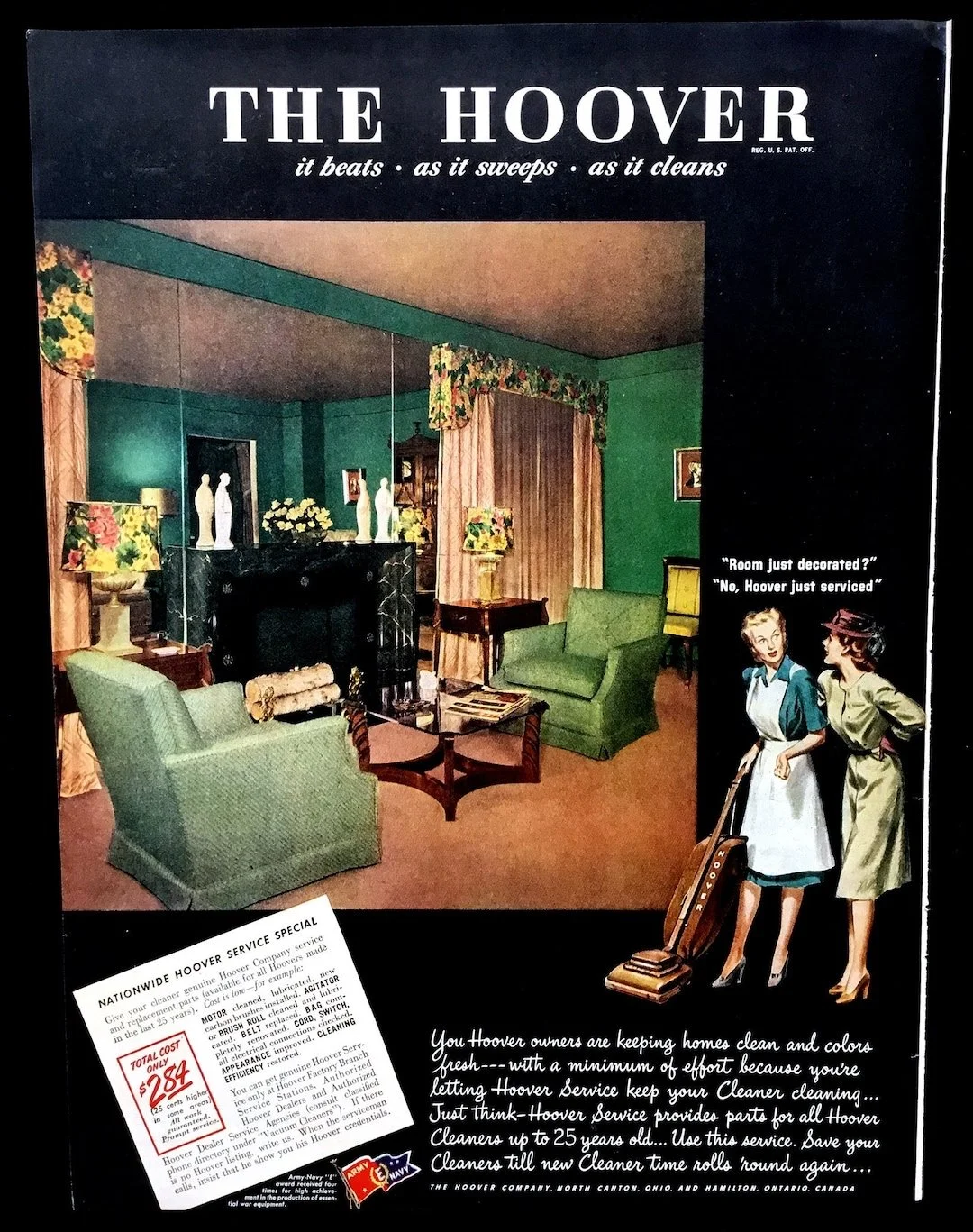
When a Brand Becomes a Product
I have always found it interesting how some brands become so familiar that people almost stop seeing them as brands. They become part of normal language. Hoover is probably one of the best examples of this, especially in the UK. Hoover is obviously a specific company, but most people will still say they are “hoovering” the floor, even if the vacuum cleaner they are using is made by Dyson, Shark, Henry or any other brand. The brand name has become the word for the action.
This is what I have been thinking of as the “Hoover effect”. It is the idea that a company can become so dominant, recognisable or culturally embedded in a product space that its name starts to represent the whole category. It is no longer just the name printed on the object, it becomes the word people use for the thing itself.
There are loads of other examples of this. People often say Kleenex when they mean tissues, Band-Aid when they mean plasters, Velcro when they mean hook-and-loop fastening, Post-it when they mean sticky notes, Thermos when they mean a vacuum flask, Jacuzzi when they mean a hot tub, and Google when they mean searching for something online. Even Photoshop has become a verb, where editing or manipulating an image is often described as “photoshopping” it, regardless of the software being used.
From a design point of view, I think this is really interesting because it shows that branding is not just about logos, colours or adverts. It is also about how a product fits into people’s lives. A brand can become attached to a routine, an action or a habit. Hoover became attached to cleaning. Google became attached to searching. Photoshop became attached to altering images. These brands did not just become recognisable, they became useful pieces of language.
There is a strange power in that. In one way, it is probably one of the biggest signs of success a brand can achieve. If people use your name to describe an entire type of product, it shows that you have become the first thing they think of. You have not just entered the market, you have helped define it.
At the same time, there is also a risk. If the brand name becomes too general, the company can start to lose control of its own identity. The name becomes so widely used that people forget there is an original brand behind it at all. That is the odd contradiction of the Hoover effect: the brand becomes extremely powerful, but also slightly less specific.
I think what interests me most is that this effect sits somewhere between design, business, culture and language. It is not just about making a good product. It is about making something that becomes so familiar that people build it into the way they speak. The most successful products do not just solve a problem, they can actually change the words we use to describe the solution.